Showing posts with label Vintage Lenses. Show all posts

Sunday, February 6, 2022

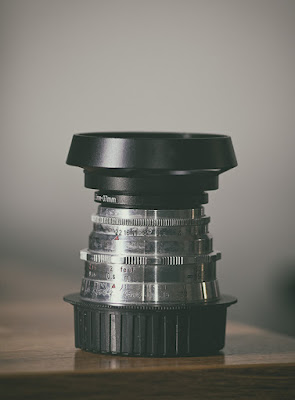
Meyer-Optik Trioplan 50mm f/2.9 - Bokeh that you either Love or Hate. But can't ignore.

Meyer Optik Görlitz lenses have a very long legacy in the world of camera optics and there is a huge fan following for these lenses even today. 
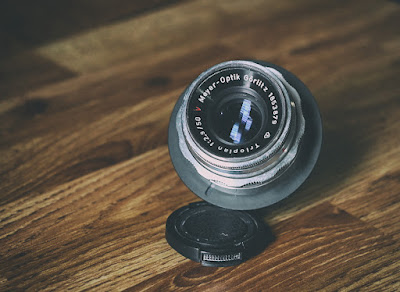


There are lots of literature available on the internet that explains the history of the company from various perspectives. Below are a few such links. 

History of Meyer Optik from 1896 till today!

Camera Wiki page of Meyer

In the list of Meyer lenses, there are a few families of lenses that have a special place in the hearts of vintage lens shooters. Those are Primoplans and Trioplans. Meyer Optik produced two lenses in the Primoplan series - Primoplan 58mm f/1.9 and Primoplan 75mm f/1.9. More about the Primoplans in another post. The Trioplan series consists of Trioplan 50mm f/2.9 and the more famous Trioplan 100mm f/2.8. 
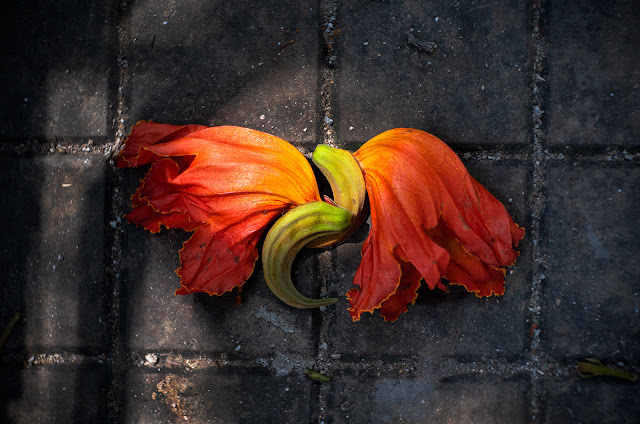


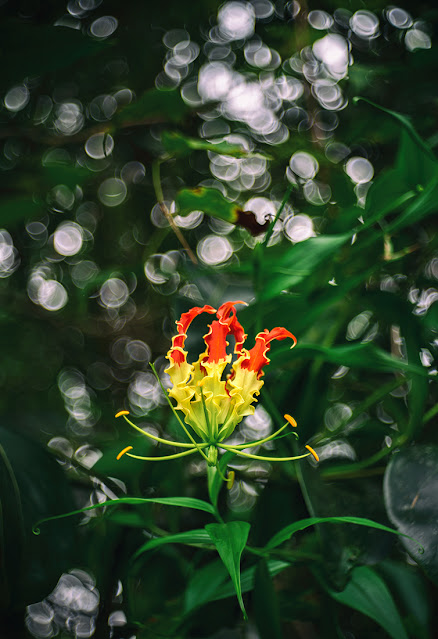
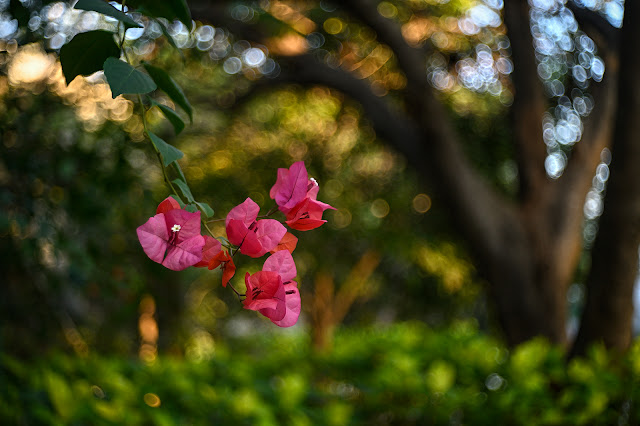
While the Primoplans are known for their buttery-smooth rendition of the bokeh with some added punch, the Trioplans are very well known for their soap-bubble bokeh! While it is very understandable that the Primoplans gained a lot of success for their usage in portraits, thanks to the exceptional rendition by them, what I am still perplexed is the real and practical usage of Trioplans in those days of 1950s and 60s. This is due to the fact that Trioplan lenses render the bright spots in the out-of-focus area as soap bubbles, whose liking is very subjective according to me. To some, they look awesome and very unique (of course they are unique) and to some they are distractions! The fact that I am writing this post almost indicates that I belong to the former group! :-)
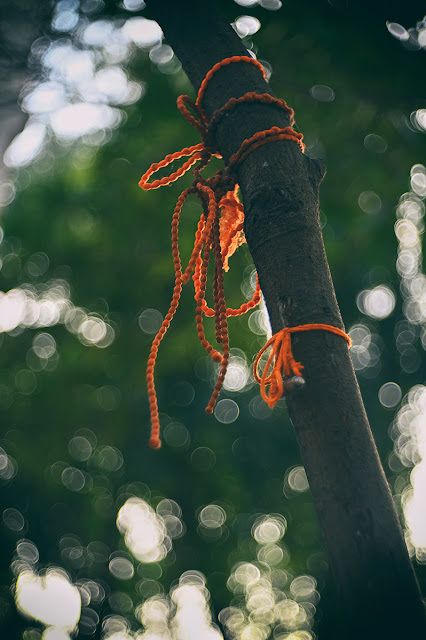
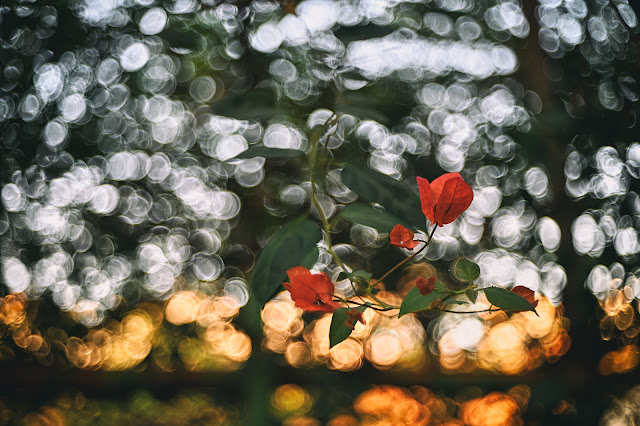

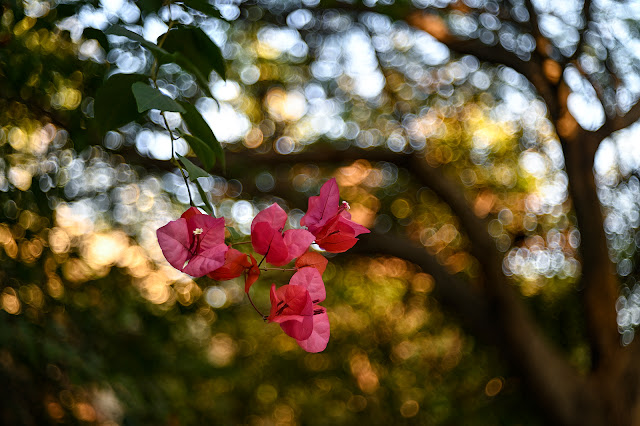
Trioplan 100mm f/2.8 is a more popular lens than the 50mm f/2.9. So much so that even today a lens in good condition would cost at least $700! As I am not so adventurous yet, I went for the cheaper sibling - 50mm f/2.9, and mine was adapted for the Nikon F mount by a gentleman in Ukraine! 


What I like about Trioplan 50mm f/2.9:

- Of course the Bokeh...what else?!!

- Rich Color rendering

- Excellent contrast. Doesn't feel like a lens made in the early 1950s! 

- Very decent sharpness wide open. Definitely not soft, not even close! 

- Stop down the aperture a little and the sharpness becomes quite unbelievable! 


What I don't like:

- Don't pixel peep on the edges of the photos. They would be soft. 

- That's it! Rest everything I like! :-)


This lens wants you to shoot for its strength. For that matter, most of the vintage lenses are like that. 

Under the right conditions, this lens can create some magical images, which no other lens can produce. 


Cheers,

Ash


Friday, December 31, 2021

Carl Zeiss Biotar 58mm f/2 - The King of Character!

 My first stint with Zeiss lenses was way back in 2015 when I bought Zeiss Distagon 28mm f/2. That is one of my favorite lenses in my bag (rather the dry cabinet!). I have written a few blogs where the images were made from that lens. You can find those blogs HERE.  

Post the Distagon 28, although I wanted to buy a few more Zeiss lenses but couldn't. In 2019, when I started to study various vintage lenses there was one lens that many photographers and vintage/manual focus lens forums prominently talked about. It was Carl Zeiss Biotar 58mm f/2. 


This lens was in production between 1936 till 1960, although the design dates back all the way to the 1920s.


The lens that I am using was produced somewhere in 1950 or 1951! (Uff!! Even my parents were not born then!). How do I know when the lens was produced? The serial number! The age of most of the vintage lenses can be found using their serial numbers. For example, THIS LINK has all the data of the serial numbers of Carl Zeiss lenses and when they were produced. 


Now coming to the performance of the lens - absolutely brilliant! For the lens of its age, it still performs marvelously! Below is the list of my observations in an easy-to-read form!

- Distinct character in the out of focus area! Very 'Biotar like' :-)

- Unique Swirl in the outer edges of the frame. You would either love it or hate it. I am the former kind!

- Sharp rendering of the object in focus. 

- Produces images with rich, vivid, and warm colors 

- The 17 blades aperture makes sure that the out of focus is creamy and highlights are very circular even at low apertures

- Not a great performer when you shoot against strong light, a common trait in most of the vintage lenses, due to the poor quality (as compared to today) coating on the lens. But one can use this quality to get low-contrast images that produce some wonderful black-and-white results.


    (Notice the Swirl in the outer edge of the frame. As said, you will either love it or hate it!:-))


(Notice the shapes of the highlights in the out-of-focus region. This was due to the high aperture blades retaining circular shape at all apertures) 


This lens inspired a new breed of lenses in some other part of the world - Russia! The Helios-44 series, which is fairly known in the photography community now is said to be the direct copy of the Biotar design but because that lens was in production a few decades more than the original Biotar, the later versions of the Helios-44, say Helios-44-4 and Helios-44-7 perform much better in optical characteristics like flare and sharpness, due to the advancement of technology. But they all attribute their existence to the original legend - Carl Zeiss Biotar 58mm f/2.   


There is plenty of literature online about this lens and its history. I don't want to reinvent the wheel in this matter. Out of all those THIS ARTICLE gives the best idea about its history, its various versions, and different characteristics of those versions.  


All the images in this blog (except the image of the lens itself) are shot with Biotar-58. I just love its rendition! What is a rendition? That is something worth writing a whole different blog for itself! Perhaps sometime soon?!   


Cheers,

Ash


Sunday, October 3, 2021

Some Gold from the Old!

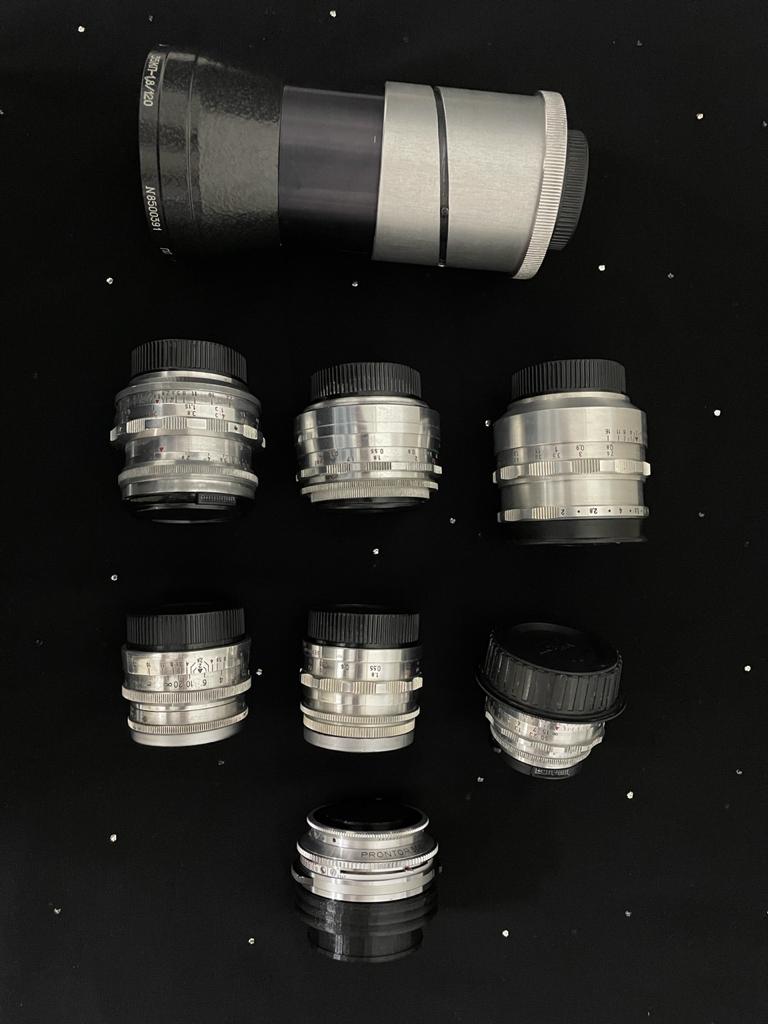
Since mid-2019 I have been spending time understanding some of the legendary lenses of the past era! By past, I mean from around 1950s. It is a fascinating journey in the world of the evolution of optics and from where we stand today if we take a look back, not many would know and appreciate this evolution to the fullest. 


I don't seem to remember how it all started for me. But what I certainly remember are those moments when I was just awestruck by some of the images I saw that were made from some of the legendary lenses of the past! 

It is widely talked about and almost a cliche that the old lenses have a 'character' that the modern, razor-sharp lenses lack! But I always wondered what is this 'character' that everyone talks or writes about! As I went deeper into the realm of the post-world-war German and Soviet lenses I could see what the other people are talking about! It was certainly something that I had not seen or experienced before! 

Since then I have started to collect some of those lenses from various parts of the world! How I collected them is a fascinating story in itself, which perhaps maybe for another day. I have collected is the right expression, at this moment since I have hardly used all of them extensively on the field. Beyond some test shots and some window/walking photography, I hardly went to any serious shoot in a while. So I think the time has come to put them to good use. I am planning to start a series of blogs where I try to write my experience with each of these lenses with some meaningful images to go along with. This way, I will be having self-inflicted pressure to use a particular lens for a few days or weeks to make some serious photography. 


Thanks to my wife Sahana for making some beautiful images of the lenses :-)!


Cheers,
Ash